

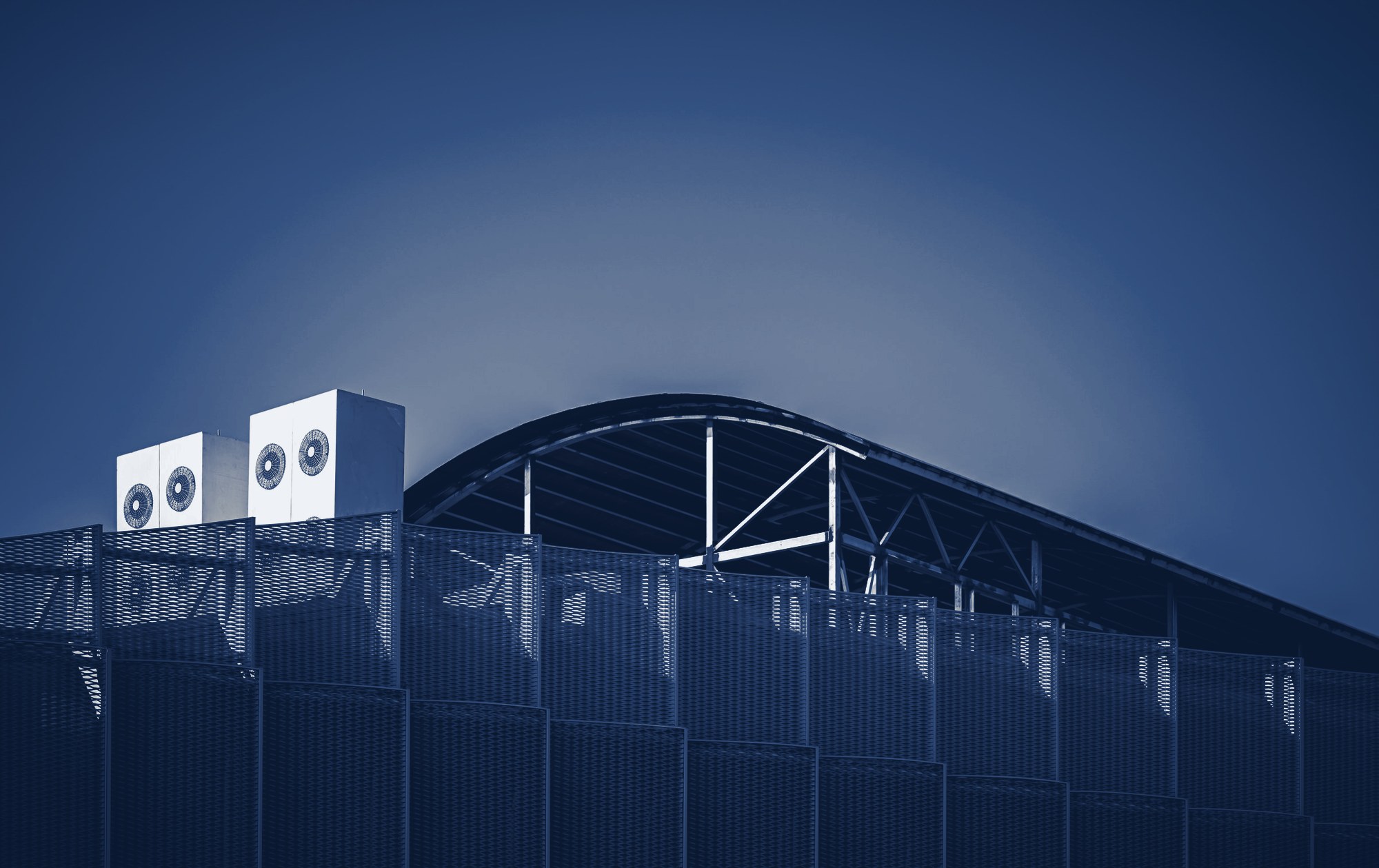
Most people experience an office building through its lobby, its elevators and the temperature at their desk. Few think about the equipment rooms, roof units, electrical gear and control systems that make those experiences possible. When the building runs well, that infrastructure is invisible. When it does not, tenants notice immediately.
Cotra Plaza operates Class A office buildings, and a large share of our attention goes to the parts of a building tenants never see. Heating and cooling, vertical transportation, electrical distribution, life-safety systems, the roof and the building envelope all determine whether a property is comfortable, safe and economical to run.
This work is the practical side of Cotra’s belief that value in real estate is created on site. A building’s reputation is built in the lobby, but it is sustained behind it.
This article describes how we think about that work: understanding the systems, maintaining them before they fail, managing energy carefully and planning capital over the long term.
Knowing the building
Good operations start with a clear picture of what a building contains. When we take on a property, one of the first tasks is to document its major systems: what equipment is installed, how old it is, how it has been maintained, what drawings and service records exist and where the known weaknesses are. Gaps in that record are common, and filling them is worth the effort.
We combine document review with time in the building. Walking mechanical rooms with experienced engineers, talking with the vendors who have serviced the equipment and listening to tenants about recurring comfort issues all reveal things a report alone cannot. A floor that is always too warm in the afternoon or an elevator that is taken out of service more often than the others tells us where to look.
The result is an inventory that guides everything that follows. It tells the operating team what to maintain and how often, tells the business plan what capital may be needed and when, and gives our investment committee a realistic view of the property’s physical condition.
Preventive maintenance as a habit
Reactive maintenance is expensive. Equipment that fails without warning tends to fail at inconvenient times, often costs more to repair under pressure and frequently disrupts tenants. Preventive maintenance is the discipline of servicing equipment on a schedule so that problems are found while they are still small.
Our teams build maintenance schedules around manufacturers’ guidance, the age and condition of each system and the way the building is actually used. Filters, belts, pumps, cooling towers, boilers, fire protection equipment and elevators each have their own rhythm of inspection and service. Those tasks are scheduled, assigned and tracked, so that no one has to rely on memory to know when something is due.
Tracking matters as much as scheduling. A completed task is recorded with what was found and what was done. Over time, those records show which equipment is performing as expected and which is consuming more attention than it should. That pattern is often the first signal that a system is approaching the end of its useful life.
“Preventive maintenance is the discipline of servicing equipment on a schedule so that problems are found while they are still small.”
Service requests and the tenant view
Even well-maintained buildings generate service requests. A conference room runs warm, a light fixture fails, a door does not latch. How those requests are handled shapes a tenant’s view of the building more than almost anything else the operating team does.
We want requests to be easy to submit, quickly acknowledged and resolved by someone who follows through. Each request is logged, assigned and closed with a note on what was done. When a fix will take time, the tenant hears that directly, along with a realistic estimate. Patterns in requests also feed back into maintenance planning: if the same complaint keeps arriving from the same area, the underlying cause deserves attention.
After-hours service deserves a plan of its own. Tenants work different schedules, and some depend on building systems in the evening or on weekends. Clear procedures for requesting after-hours heating or cooling, reaching on-call staff and reporting urgent problems help tenants feel supported whenever they are in the building.
Energy as an operating discipline
Energy is one of the largest controllable costs in an office building, and it is closely tied to tenant comfort. We approach it as an ongoing operating discipline rather than a single project. The goal is a building that uses what it needs to keep people comfortable and productive, and no more.
Much of the work is unglamorous. Control sequences are reviewed so that systems run when spaces are occupied and set back when they are not. Equipment schedules are adjusted to actual tenant hours. Lighting, ventilation and temperature settings are checked against how floors are used today, which may differ from how they were used when the building was last commissioned.
Larger improvements, such as replacing aging equipment with more efficient systems or upgrading controls, are evaluated within the capital plan. We weigh the cost of the work, the expected operating savings, the effect on tenant comfort and the disruption involved. Some improvements make sense on their own; others make sense when timed with a replacement that is already needed.
Planning capital over the long term
Every Cotra property has a written business plan, and for an office building a significant part of that plan is the capital schedule. It sets out which major systems and building components will likely need repair or replacement over the period we expect to own the property, what the work might involve and how it will be sequenced.
Planning capital this way lets us budget for large items before they become emergencies. It also lets us schedule disruptive work around tenants’ needs, with notice and coordination, and it lets us combine related projects so that a building is not opened up repeatedly for work that could have been done together.
Capital spend is reported against budget every month as part of the same reporting used across the Cotra family. When a project runs over, comes in under or needs to move, the reason is documented. That record keeps the operating team, our investment committee and our partners looking at the same information.
“Planning capital this way lets us budget for large items before they become emergencies.”
Safety and compliance
Life-safety systems deserve particular attention. Fire alarms, sprinklers, emergency lighting, generators and elevator safety devices must be inspected and tested on the schedules required by codes and local authorities. Our teams maintain those schedules, keep the records and correct deficiencies promptly.
We also make sure tenants know what to do in an emergency. Floor wardens, evacuation procedures and clear communication with tenant representatives are part of operating a building responsibly. These are not tasks that can be left until something goes wrong.
Accessibility and code requirements evolve over time, and older buildings do not always reflect current expectations. We review those items as part of the capital plan, so that improvements are made deliberately and in a sensible order rather than in response to a single request or inspection.
The people who run the building
Systems and schedules matter, but buildings are run by people. Chief engineers, building technicians, property managers and trusted vendors carry the knowledge that keeps a property in good order. We look for teams who take ownership of their buildings, who notice small problems and who communicate clearly with tenants and with each other.
Those teams are supported by Cotra’s shared operating resources. Because every platform follows one operating standard, practices that work well in one building can be shared across others, and building teams can draw on the experience of colleagues facing similar questions.
Vendor relationships are part of this picture. We select service contractors for their competence and reliability, set clear expectations for response times and documentation, and review their work regularly. A good vendor who knows a building well is a real asset, and we try to treat those relationships as long-term partnerships rather than transactions.
What tenants feel
Tenants may never see a maintenance log or a capital schedule. What they experience is a building that is comfortable, reliable and well kept, and a management team that responds when something needs attention. That experience is the product of steady work behind the lobby.
It is also what protects the value of the property over time. Well-maintained systems last longer, cost less to operate and give an owner more options when it is time to reposition, refinance or plan the next phase of capital work. For an owner who intends to hold a building for many years, that is reason enough to invest in the work no one sees.
The best building operations are the ones tenants never have to think about.
This article is for general information only. It is not investment, legal or tax advice, and it is not an offer to sell or a solicitation of an offer to buy any security. See Important information.