

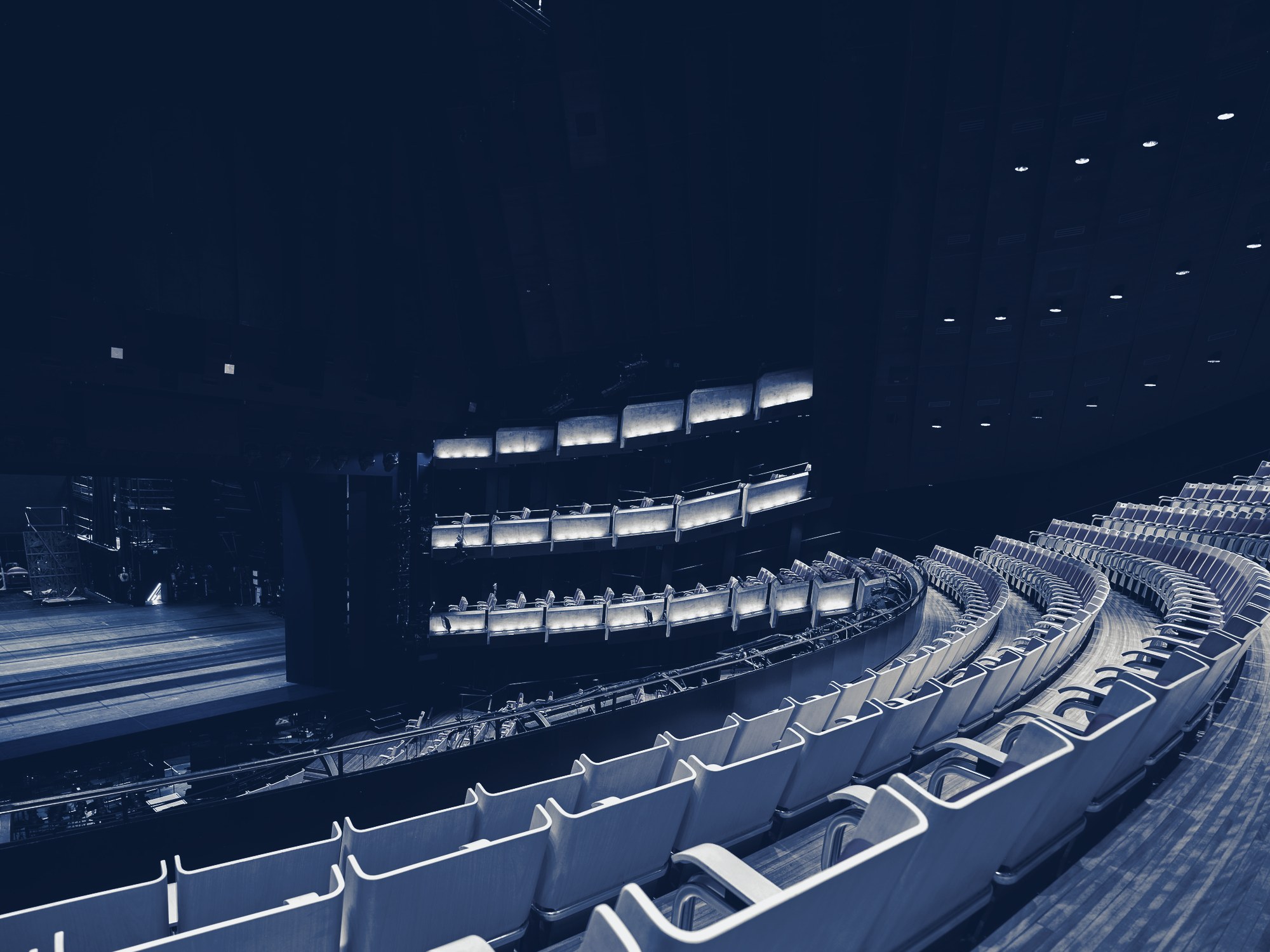
A great night at a venue looks effortless from the seats. The sound is clear, the lines move, the restrooms are clean, and the crowd leaves talking about the show rather than the building. None of that happens by accident. It is the result of a building that has been planned, maintained and staffed with the same care any well-run property receives.
Cotra Spotlight owns and operates entertainment venues and supports the live events held in them. We approach that work as real estate operators. A venue is a physical asset with roofs, mechanical systems, life-safety equipment and finishes that wear under heavy use. It is also a business that depends on artists, promoters and audiences choosing to come back.
Holding both of those ideas at once is the core of how we run a venue. The show is the reason people come. The building is the reason they return.
This article explains what that means in practice: how we plan capital, how we maintain buildings that face unusual loads, how we think about guests, and how we work with the promoters and artists who fill the calendar.
Capital planning comes first
Every Cotra property operates under a written business plan, and venues are no exception. For a Spotlight venue, that plan sets out what the building needs over the years we expect to own it: major systems, seating, rigging, accessibility improvements, back-of-house spaces and the technology that audiences and touring productions now expect.
Planning capital in advance lets us schedule work around the event calendar rather than reacting to failures in the middle of a season. Many venues have natural quiet periods, and the best use of those windows is decided months ahead, with contractors, materials and approvals lined up before the doors close.
It also lets us weigh each project against what it does for the guest and for the people who put on the show. A new loading arrangement may matter more to a touring production than a cosmetic upgrade does to a ticket holder, and the plan should reflect that. As with every Cotra asset, capital spend is reported against budget each month, so our investment committee and our partners can see what was planned, what was spent and why.
Capital planning also accounts for how quickly expectations change in live events. Production equipment, ticketing and entry technology, and guest amenities evolve faster than roofs or mechanical systems. We review those items more often, and we favor investments that keep the building adaptable rather than locking it into a single way of operating.
Maintenance is a show-day discipline
Venues carry a particular kind of operational pressure. A building may sit quiet for days and then host thousands of people in a few hours. Systems that are adequate on a slow afternoon must perform under full load, on schedule, with no room for a second attempt.
Our teams treat preventive maintenance as part of event readiness. Inspections, testing and routine service are scheduled and tracked, not left to the week of a big date. Heating and cooling, power distribution, rigging points, plumbing, elevators and life-safety systems each have their own schedule, and each is checked against the demands of the calendar ahead.
When something does need attention, the work order is logged, assigned and closed out with the same rigor we expect at an apartment community or an office building. After a large event, teams walk the building to note wear and damage while it is fresh, so repairs are made before the next audience arrives.
“The show is the reason people come. The building is the reason they return.”
This is the hands-on care in our tagline. It is not glamorous work, but it is the work that keeps a venue safe, open and ready.
Guest experience is an operating result
For a venue, the guest is the resident. Their experience is shaped by dozens of small moments: how easy it is to arrive and park, how quickly they get through the door, how clean the concourse is at intermission, how staff respond when something goes wrong and how the building feels when they leave.
We think about those moments the way we think about any operating metric. We listen to guest feedback, walk the building during events and look for friction that can be removed through better layouts, clearer signage, staffing or training. Respect for the people who use our properties is one of Cotra’s core values, and in a venue it is visible in real time.
Accessibility belongs in this conversation too. A venue should welcome every guest, and we treat accessible routes, seating and services as part of the standard of care rather than an afterthought. That includes clear information before arrival, so guests know what to expect.
Staff are central to all of this. Ushers, security, concessions and guest services teams are often the only people from the venue a guest speaks with all night. We invest in training them, briefing them before each event and giving them the authority to solve common problems on the spot, so a guest’s concern is handled where it arises.
Promoters are long-term partners
Artists and promoters choose where to play. They look for a building that is easy to load in and out of, a team that communicates clearly, settlements that are handled plainly and an audience experience that reflects well on the performance. Those relationships are built over many shows, not one.
We aim to be the kind of venue operator that partners want to return to. That means honest communication about what the building can and cannot do, reliable back-of-house conditions, and a staff that treats each production as a collaboration. It reflects the same integrity we bring to our relationships with investors and capital partners: report plainly, keep commitments and share what partners need to know when they need to know it.
Advance work is where much of that trust is earned. Technical riders, load-in schedules, staffing needs, security plans and settlement terms are confirmed well before show day, so surprises are rare and problems are solved on paper rather than on the loading dock.
Community and local partners matter as well. A venue is part of a neighborhood, and the way it handles traffic, noise, parking and late-night departures affects the people who live and work nearby. We try to be a considerate neighbor, communicate before large events and respond to concerns promptly.
Measured like any other property
Because Spotlight is part of the Cotra family, each venue follows the same operating standard as every other Cotra property. It has a written business plan, reports monthly on a consistent set of measures and operates under one set of controls from acquisition to disposition. Our investment committee approves every acquisition, development and disposition, using the same process applied across all eight platforms.
The specific measures look a little different in a venue. Occupancy may mean how full the calendar is, and satisfaction may come from guests, artists and promoters rather than residents. But the principle is the same. Every month, we want to see how a property is performing and how the people who use it feel about it.
“Every month, we want to see how a property is performing and how the people who use it feel about it.”
The value of a shared platform
Spotlight benefits from being part of a larger organization. Shared finance, operating and reporting resources sit behind the venue team, so specialists can focus on programming, production and guest experience while the business is held to one consistent standard.
Those shared resources also bring perspective. Practices from building operations, capital planning and property management elsewhere in the Cotra family often translate well to venues, and the venue team brings back lessons about guest service and event logistics that are useful in other settings.
The venue team, in turn, does not have to build every system on its own. Accounting, reporting, procurement and capital planning follow established Cotra practice, which frees local leaders to spend more of their time in the building, with guests, staff and production partners.
A building built to last
A venue run this way serves everyone who depends on it: the audience, the artists, the promoters, the staff and the owners. That is how we think about entertainment real estate at Cotra Spotlight.
We build the stage to last, so the next show is always ready.
This article is for general information only. It is not investment, legal or tax advice, and it is not an offer to sell or a solicitation of an offer to buy any security. See Important information.